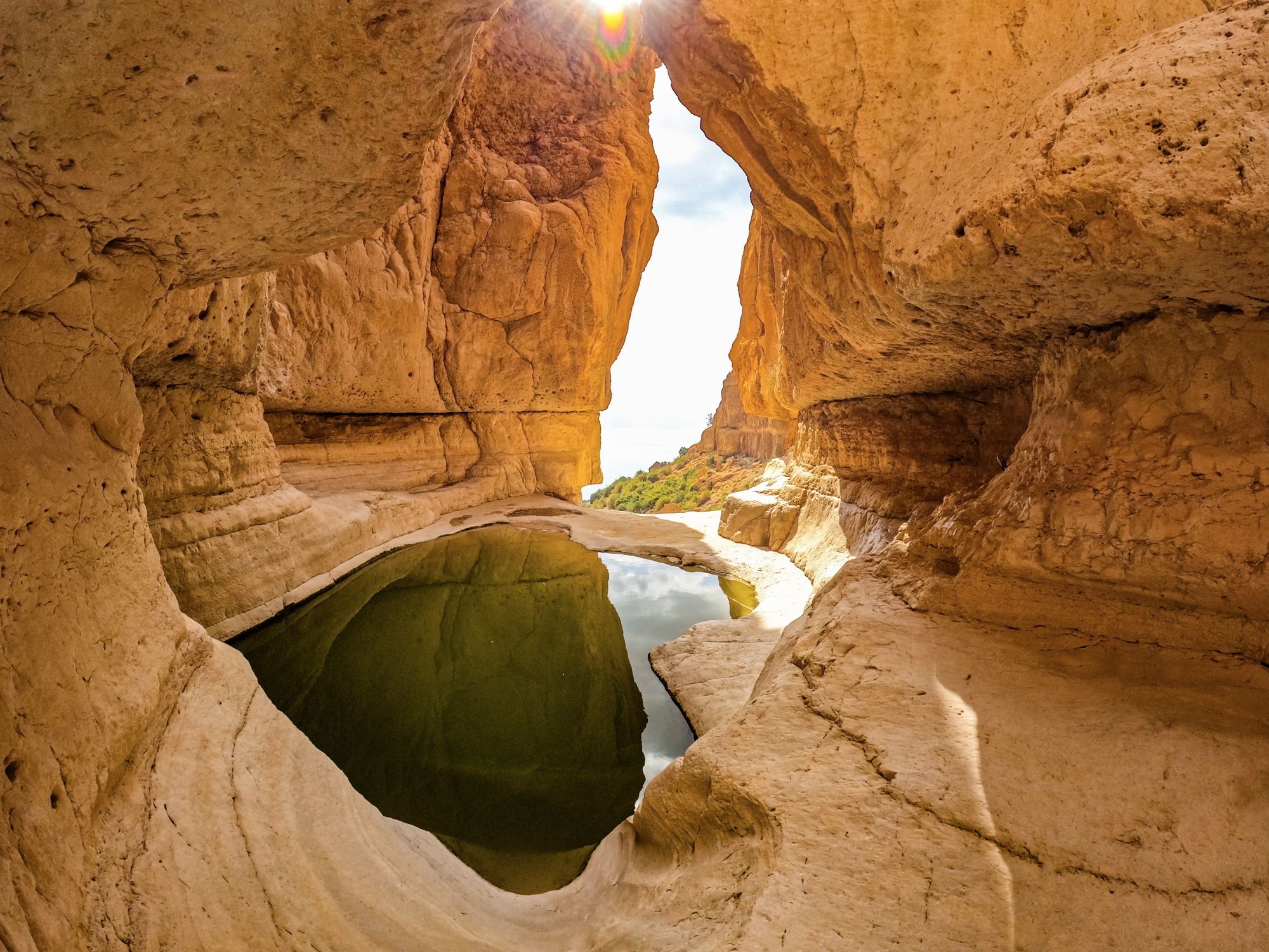
A narrow limestone canyon opening onto the sky, with a still green pool on its floor

Social lives
in the desert

We study the social lives of wild animals: how ties between individuals form, how they shape health and survival, and what travels along them, from songs to gut bacteria. Most of our fieldwork is with the rock hyraxes of Ein Gedi, a population followed for more than 25 years.

Research

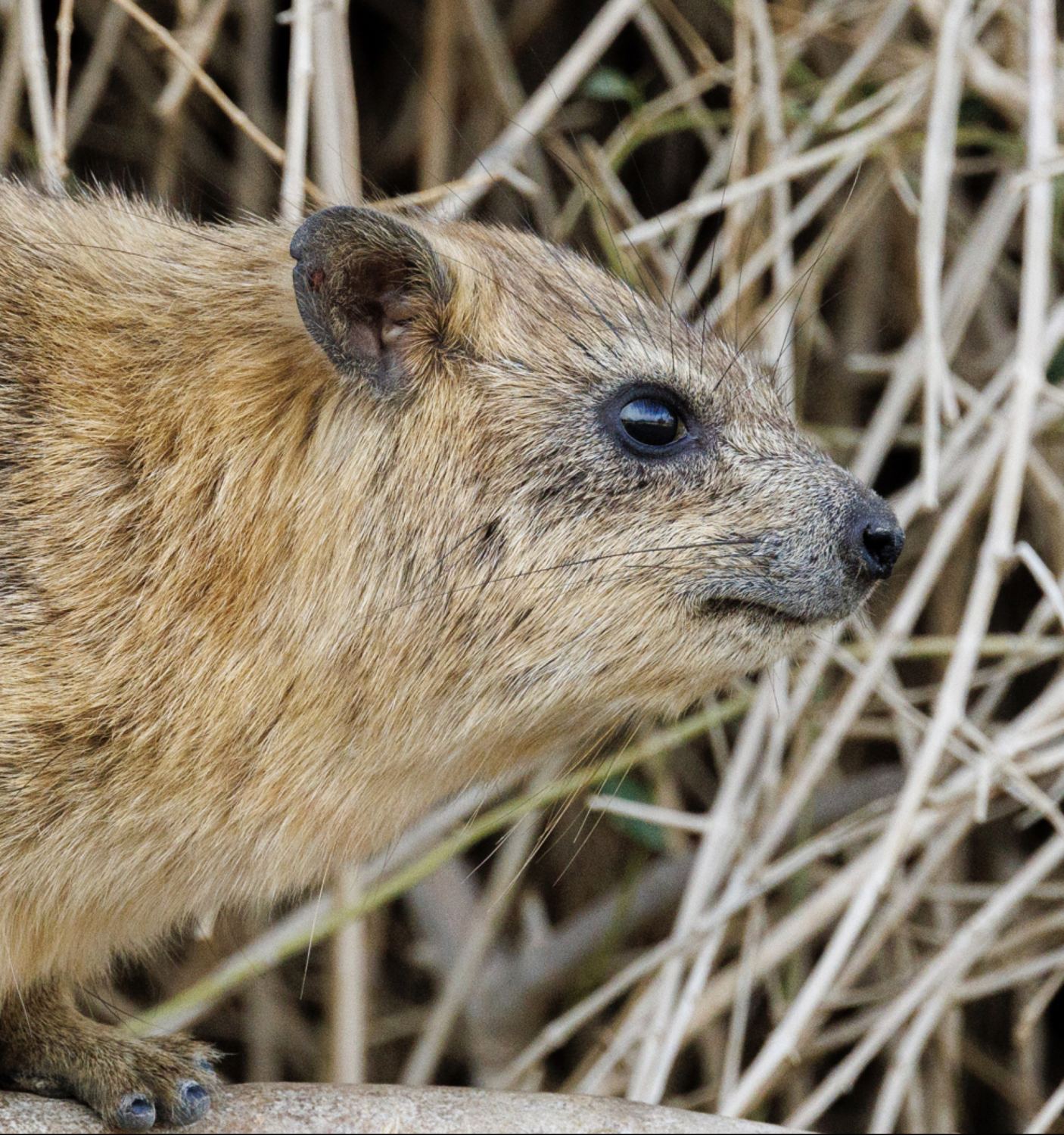
Close-up of a rock hyrax among dry reeds

How social networks form and change

Animals do not pick their companions at random. We look for the simple rules that build a network, such as young animals inheriting their mother's ties, and measure what a position in the network means for survival and reproduction.
The social microbiome

Close contact moves microbes. With shotgun metagenomics we follow how gut bacteria, down to the strain, pass within and between hyrax groups, and how diet and the landscape between groups shape that flow.

Songs and signals

Male rock hyraxes sing long, structured songs. We study how signals are built, how they evolved, and how communication fits the social structure around it. Males that keep a steady rhythm, for example, father more young.

Predators and the wider community

Social life happens under threat. We test how predation risk and food change who spends time with whom, and we are starting to follow wolves and other predators around Ein Gedi.

More about our research

People

Amiyaal Ilany Principal investigator
Neta Morag Lab manager
Mona Blyer PhD student How gut bacteria spread between hyrax groups across the Judean Desert
Prameek Kannan PhD student Social ties, diet and the hyrax gut microbiome
Asaf Tamam PhD student The hyrax genome and a catalogue of its gut microbes
Shirel Lax MSc student How the hyrax gut microbiome changes over time
Nimrod Mazal Tov MSc student Wolves and other predators around Ein Gedi
Ayana Rosenthal MSc student Finding species from DNA caught in spider webs
More about the people, and alumni
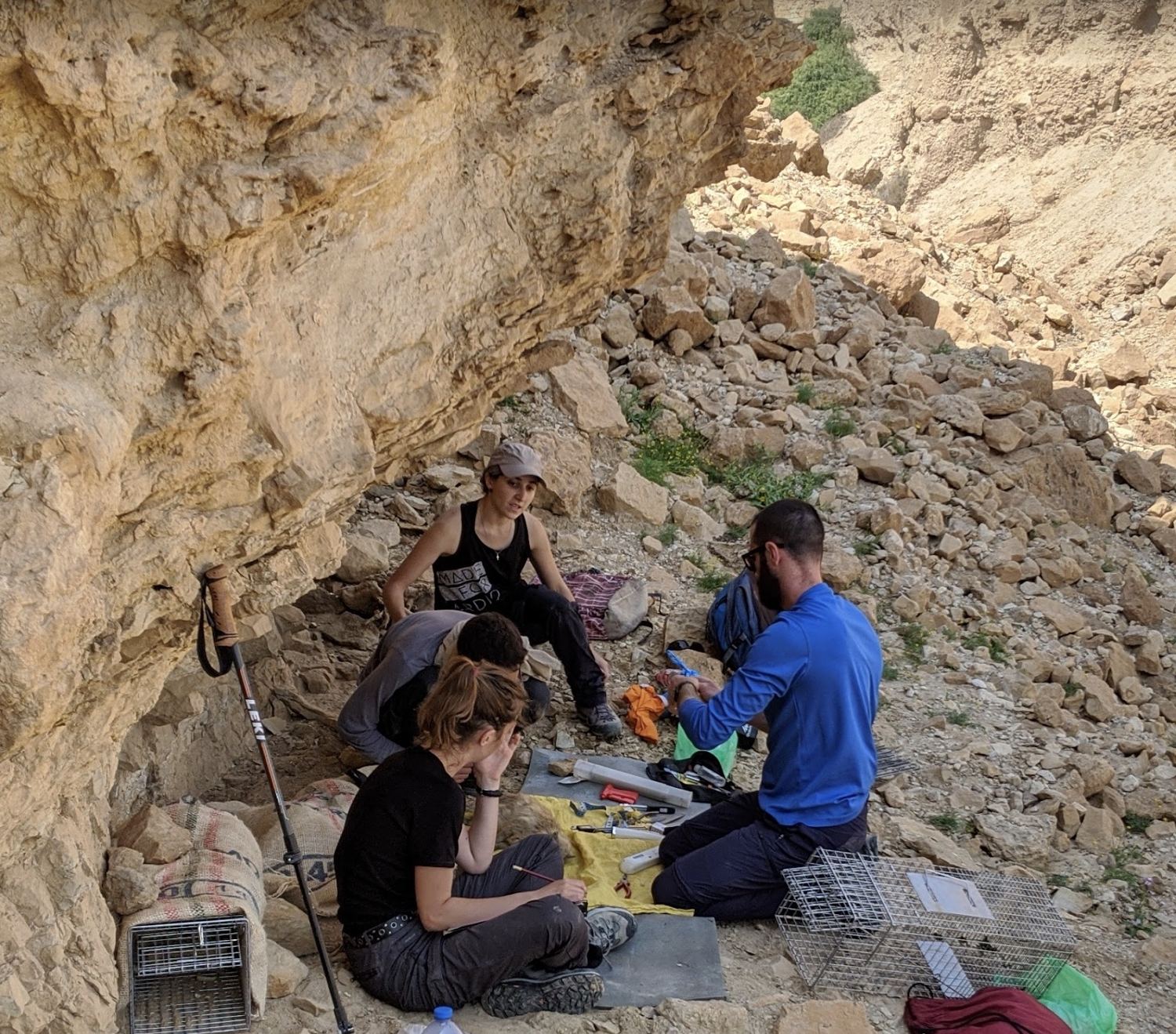
Lab members working under a rock overhang in the desert, with live traps beside them
Fieldwork under a rock overhang.

Ein Gedi

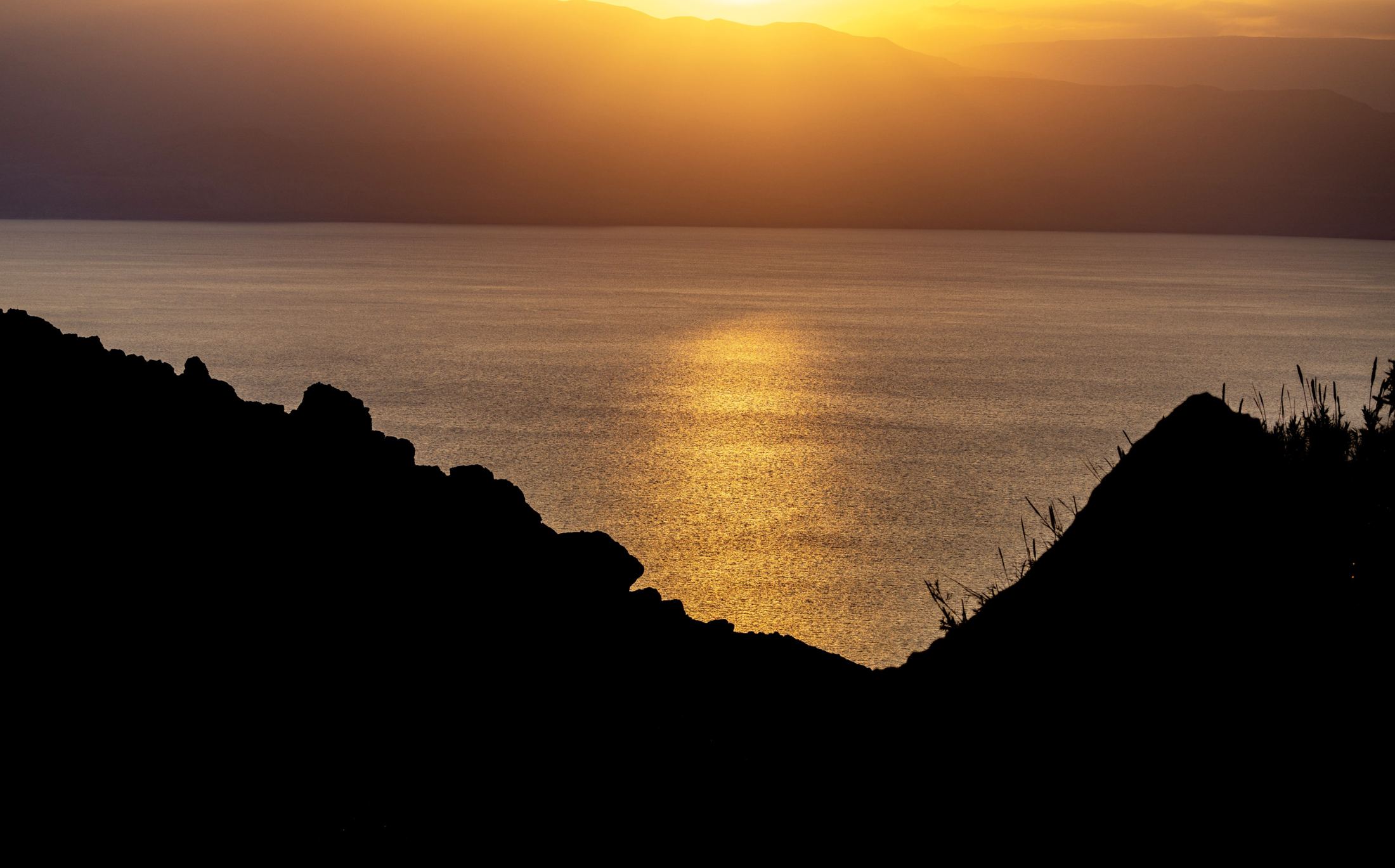
Morning light over the Dead Sea, seen from the dark cliffs above it

Ein Gedi Nature Reserve, on the western shore of the Dead Sea, is home to the hyrax population at the heart of our work. It has been followed for more than 25 years, more than 600 animals so far at two study sites.

Recent publications

  1. 2026 Taub M., Arnon I., Ilany A., Knörnschild M., Ram Y. & Yovel Y. The challenge of decoding animal communication using AI. Current Biology 36: R900–R901.
  2. 2026 Bordes C., Ammeter M., Lu C., Beukeboom R., Goll Y., Bourdiol J. & Ilany A. Social network dynamics under experimental manipulations of predation risk and food abundance in wild rock hyraxes. Journal of Animal Ecology 95: 1339–1357.
  3. 2026 Brotier H., Alba-González P., Kannan P., Geffen E., Ilany A. & Koren L. Developing objective tools to study rock hyrax (Procavia capensis) behaviour in the field. PLOS ONE 21: e0343302.

Join us

We take students and postdocs at every level, for fieldwork, computational or theoretical projects on animal sociality. You are welcome to bring your own study system.

Write to Amiyaal with a few lines about what you would like to work on: amiyaal@tauex.tau.ac.il

How to join the lab